A torn anterior cruciate ligament can leave your knee unstable even after pain and swelling settle, especially during pivoting, deceleration, or landing. You will learn how clinicians confirm ACL-related instability, when reconstruction is appropriate, what choices affect the operation, and which tests show that your knee is ready for demanding activity.
Key takeaways
- Reconstruction is more likely when instability persists during cutting, pivoting, or sport.
- Restore full knee motion and control swelling before surgery whenever possible.
- Rehabilitation progresses from motion and strength work to running and sport-specific drills.
- Return to sport only after strength, movement, and single-leg control testing.
What the ACL Does—and Why a Tear Causes Giving-Way
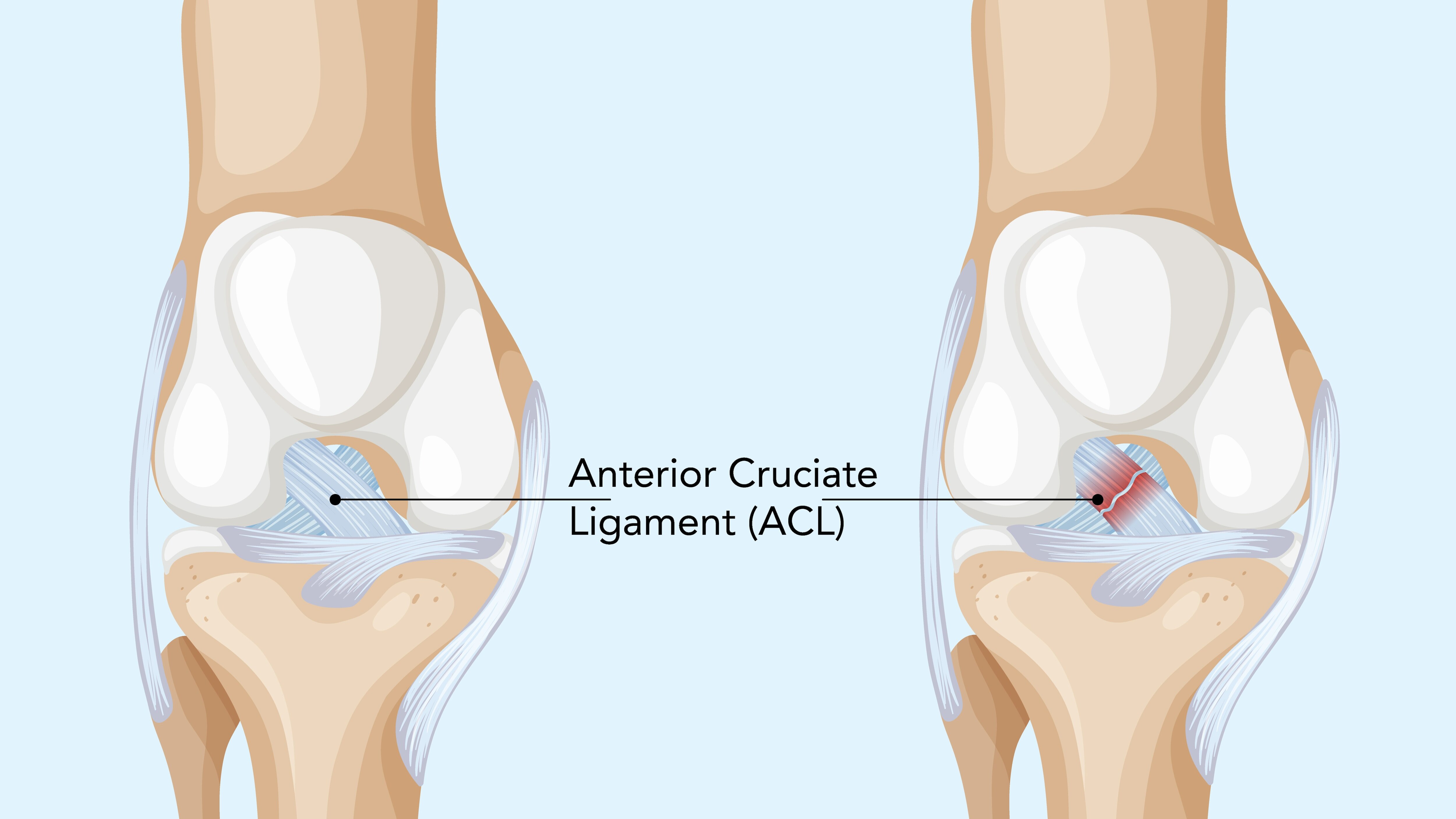
The anterior cruciate ligament is the knee’s main restraint against the shinbone sliding forward beneath the thighbone. It also limits excessive rotation during cutting, landing, and sudden stops. An ACL tear removes that restraint, so the knee can shift unexpectedly when you pivot or change direction.
That sudden collapse is a giving-way knee and a key sign of knee instability.
ACL reconstruction replaces the torn ligament with a tendon graft; it does not simply stitch the original ACL back together. A tear is not the same as every knee injury:
| Injury | Main problem | Typical clue |
|---|---|---|
| ACL tear | Forward and rotational laxity | Buckling during pivots, deceleration, or uneven steps |
| Meniscus tear | Damage to the knee’s shock-absorbing cartilage | Joint-line pain, catching, or locking |
| MCL or LCL injury | Side-to-side laxity | Pain or looseness on the inner or outer knee |
| Patellar instability | Kneecap slides or dislocates | Front-knee shifting, often with apprehension |
These injuries can occur together. Reconstruction may reduce recurrent buckling, but it cannot erase meniscus or cartilage damage, and some weakness or rotational looseness can remain after surgery.
When Rehabilitation Is Enough and When Reconstruction Is More Likely
A person with low activity demands, a stable-feeling knee, and no recurrent buckling may regain useful function through structured rehabilitation. Someone aiming to return to football, basketball, skiing, or other pivoting sports faces a stronger case for reconstruction, especially if instability persists despite good rehabilitation.
ACL reconstruction criteria become more compelling when these findings are present:
- Recurrent buckling during stairs, turning, work, or sport, particularly with a positive Lachman or pivot-shift examination.
- A meniscus injury, cartilage damage, or another ligament injury that increases abnormal loading or needs repair.
- A job requiring climbing, carrying, kneeling, rapid direction changes, or work on uneven ground.
- Failure to restore full extension, strength, confidence, or functional stability after structured rehabilitation.
- Open growth plates in a child or adolescent; this changes tunnel placement and graft planning rather than automatically ruling surgery in or out.
MRI shows associated damage, but the decision also depends on symptoms, examination laxity, knee motion, and the opposite knee. Do not rush into reconstruction while marked swelling or restricted motion remains, because a stiff knee raises postoperative stiffness risk. Conversely, repeated giving-way can worsen meniscus and cartilage damage while you wait.
Dr. Santosh Pandey can help separate persistent mechanical instability from weakness or poor movement control before a surgical decision is made.
Related services
Fracture Management ## Fracture Management Fracture management focuses on the accurate diagnosis, treatment, and rehabilitation of broken bones to ensure proper healing... View service → |
Arthroscopy Procedures by Dr. Santosh Pandey – Orthopedic Surgeon Dr. Santosh Pandey is an experienced orthopedic surgeon providing advanced arthroscopy procedures for the... View service → |
Preparing for Surgery: Examination, MRI, Motion, and Graft Selection
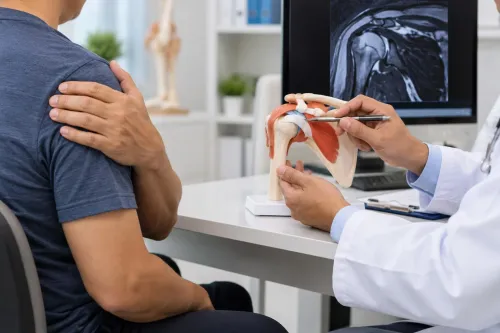
Surgery planning starts with a knee that can fully straighten, not merely an MRI showing a torn ACL. Examination checks swelling, tenderness, flexion, extension, quadriceps activation, alignment, ligament laxity in both knees, and signs of meniscus injury. The Lachman test and pivot-shift test assess forward and rotational instability.
An MRI knee scan shows the ACL tear and associated meniscus, cartilage, bone, or collateral-ligament damage. Skeletal maturity, work demands, sport goals, and the opposite knee also matter.
1. Use a prehabilitation ACL plan to reduce effusion, restore near-full extension and useful flexion, and reactivate the quadriceps. Operating on a swollen knee that cannot straighten raises the risk of postoperative stiffness.
2. Set timing around motion, swelling, associated injuries, and recurrent giving-way. There is no mandatory waiting period, but surgery on a markedly stiff knee is usually poor preparation.
3. Choose the graft after discussing fixation, donor-site symptoms, strength demands, age, and re-tear risk.
| Option | Main trade-off |
|---|---|
| Patellar-tendon autograft | Strong fixation; more kneeling or front-knee pain |
| Hamstring autograft | Less front-knee pain; possible hamstring weakness |
| Quadriceps-tendon autograft | Large graft; possible thigh weakness |
| Donor allograft | No harvest wound; higher failure risk for young, high-demand athletes |
What Happens During ACL Reconstruction and on the Day of Surgery
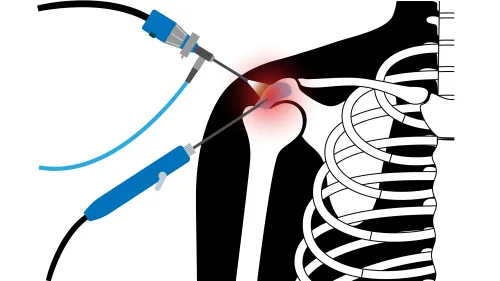
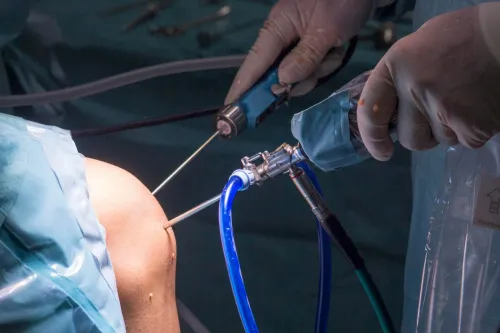
During arthroscopic ACL reconstruction, the surgeon removes damaged ACL tissue only as needed, drills matching tunnels in the tibia and femur, passes the graft, and secures it under tension.
- The femoral and tibial tunnels position the graft along the original ACL pathway.
- Graft fixation uses interference screws, cortical buttons, or another implant selected for the graft and bone quality.
- A torn meniscus is repaired when the tear has healing potential; irreparable tissue is trimmed while preserving as much meniscus as possible.
- Cartilage damage or other injuries can be treated during the same operation, extending the procedure.
A patellar tendon autograft offers bone-to-bone fixation but can cause kneeling or front-of-knee pain. A hamstring autograft usually reduces kneeling discomfort but can leave temporary hamstring weakness; the surgeon matches the graft to your age, sport, anatomy, and prior surgery.
General anaesthesia, sometimes combined with a regional nerve block, depends on your health, preferences, and the anaesthetist’s assessment. An isolated reconstruction often takes about one to two hours; meniscus repair and additional procedures add time.
You can usually leave the same day after pain and nausea are controlled, you can use crutches safely, and no medical issue requires observation.
The Rehabilitation Path From Swelling Control to Running
The early target is a quiet, fully straight knee with the quadriceps switched on—not simply less pain. During the first 1–2 weeks, control swelling, regain full knee extension, progressively bend the knee, and walk with weight bearing after ACL surgery as tolerated when your surgeon permits it.
A limp, persistent swelling, or inability to lift the leg straight signals a problem to address.
A practical ACL rehabilitation timeline looks like this:
- Weeks 2–6: restore near-full flexion, normalize walking, and build quadriceps and hamstring strength. Begin a stationary bicycle once you can pedal through a comfortable range, often around weeks 3–6.
- Weeks 6–12: progress resistance training, balance, step-downs, and single-leg control. The knee should remain stable with minimal effusion before impact work.
- Around months 3–5: introduce jogging only after full motion, good strength, controlled single-leg landing, and no meaningful swelling. Running on a straight path does not prove readiness for cutting.
- Later months: add hopping, acceleration, deceleration, direction changes, and sport-specific cutting drills under supervision. Progress from planned movements to reactive drills and fatigue conditions.
Meniscus repair, cartilage treatment, or additional ligament reconstruction can restrict bending, loading, cycling, or running. Follow the surgical plan rather than a calendar. A new giving-way episode, pop with rapid swelling, fever, calf swelling, or lost extension needs prompt assessment.
How to Prove Readiness for Sport—and Protect Both Knees
Pain relief and elapsed time do not prove readiness for return to sport after ACL reconstruction. A knee can feel normal while quadriceps weakness, poor deceleration, or fatigue-related inward collapse remains. Returning to pivoting or contact sport before nine months raises reinjury risk in young athletes, but nine months alone is not a clearance test.
Check these domains before progressing:
- Full extension, functional flexion, minimal swelling, and a stable Lachman and pivot-shift examination.
- Quadriceps strength symmetry and hamstring strength, measured against the uninjured side; aim for near-symmetry rather than accepting a painless jog.
- Hop testing, including single-leg hop for distance, triple hop, crossover hop, and timed hop, with controlled landing, knee alignment, and no loss of balance.
- Cutting, stopping, and landing under fatigue, because a straight-line run does not reproduce pivoting or contact demands.
- Psychological readiness using the ACL-RSI questionnaire, confidence, and honest assessment of fear of reinjury.
| Test | A reassuring finding | Remaining concern |
|---|---|---|
| Quadriceps strength symmetry | Near-equal force between legs | It may hide poor landing control |
| Hop testing | Similar distance, time, and mechanics | Fatigue can expose valgus |
| ACL-RSI score | Confidence to compete | Passing does not eliminate reinjury risk |
Protect both knees: the opposite ACL can tear too.
Frequently asked questions
When is ACL reconstruction more likely than rehabilitation alone?
Reconstruction is more likely when the knee repeatedly gives way, you play pivoting sports, or instability threatens work and daily activities. Rehabilitation alone can suit selected people with stable knees and lower demands.
What happens before ACL reconstruction?
Your clinician examines knee stability, swelling, range of motion, and associated injuries. An MRI shows the ACL tear and checks the menisci, cartilage, and other ligaments. You also discuss graft choices and restore motion before surgery.
What does ACL reconstruction involve?
The surgeon replaces the torn ACL with a tendon graft using small incisions and tunnels in the thighbone and shinbone. The operation is usually performed under anaesthesia, followed by bracing, pain control, and early physiotherapy.
When can you run or return to sport after ACL reconstruction?
Running begins after swelling is controlled, motion is restored, and strength and single-leg control meet rehabilitation targets. Return to sport requires objective testing, sport-specific drills, and clearance rather than a date alone.