Severe hip damage can affect sleep, walking, balance and basic tasks, but an X-ray alone cannot decide whether replacement is appropriate. By the end, you will understand what the operation replaces, how clinicians confirm the problem, which treatment options differ, what to compare before surgery and how recovery is usually staged.
Key takeaways
- Persistent groin pain and restricted rotation warrant a hip assessment.
- X-rays confirm joint-space loss, bone changes and femoral-head deformity.
- Total replacement suits damaged ball and socket; hemiarthroplasty replaces only the ball.
- Compare implant fixation, surgical approach, risks and rehabilitation before choosing surgery.
What severe hip damage affects—and what a replacement replaces
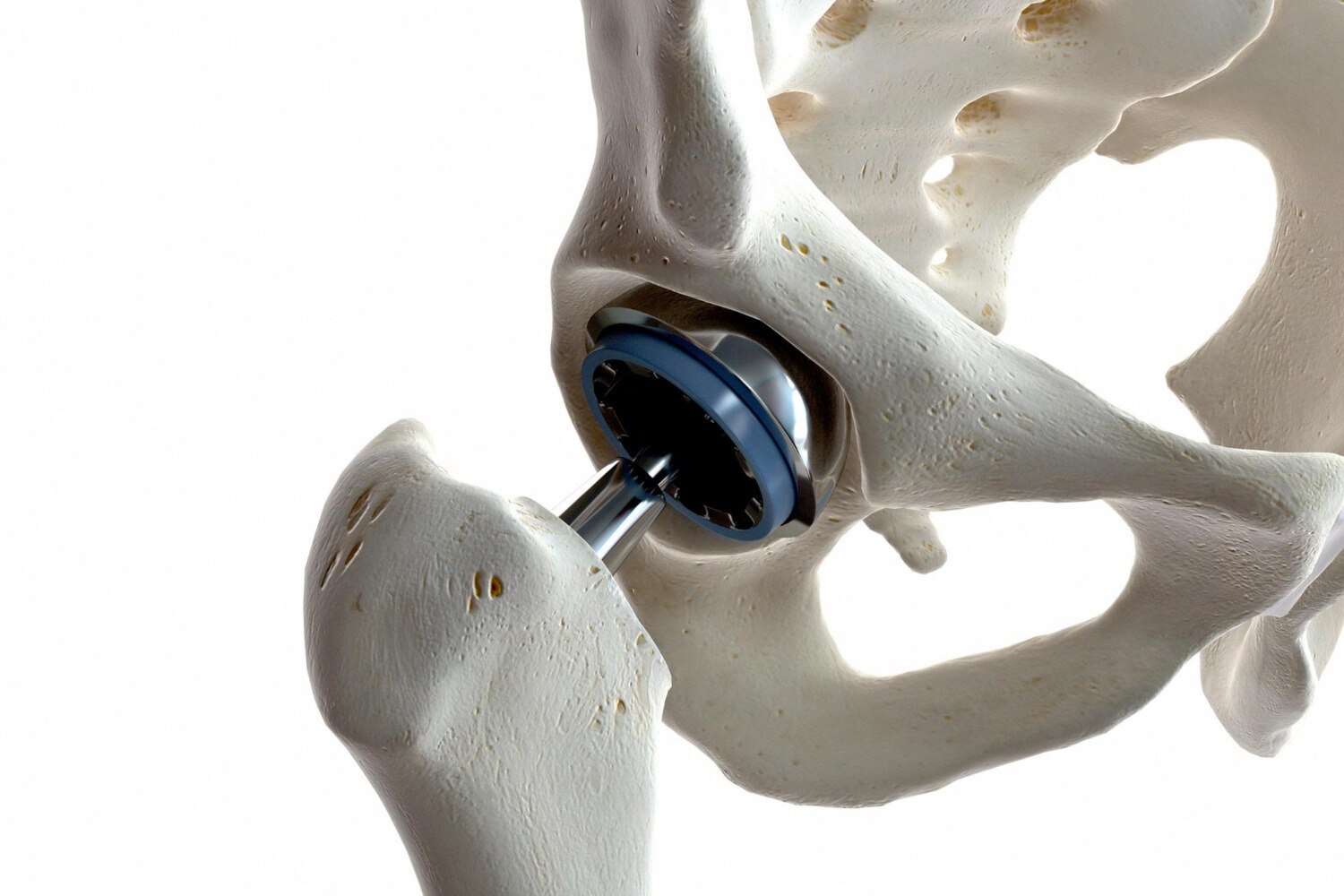
The hip is a ball-and-socket joint: the rounded femoral head moves inside the acetabular socket, while the femoral neck connects the head to the thighbone. Severe damage can wear away the smooth cartilage on either surface, expose bone, deform the femoral head, narrow the joint space and restrict rotation.
The surrounding muscles, tendons and ligaments are not automatically replaced.
Common causes include:
- Osteoarthritis, which progressively breaks down cartilage and can deform both sides of the joint.
- Rheumatoid arthritis, in which persistent inflammation damages cartilage and bone.
- Avascular necrosis, where reduced blood supply causes the femoral head to collapse.
- A displaced hip fracture, especially through the femoral neck.
- Developmental hip dysplasia, where poor socket coverage increases abnormal loading and early arthritis.
A total hip replacement removes the damaged femoral head and femoral neck, then places a metal stem inside the thighbone with a ball at its upper end. The surgeon resurfaces the damaged acetabular socket with a metal cup and a bearing liner, creating the new joint between the artificial ball and cup.
It does not replace the entire pelvis or every tissue around the hip.
A hemiarthroplasty replaces the femoral head but leaves the patient’s acetabular cartilage in place. It is used mainly for selected displaced femoral-neck fractures, not advanced arthritis affecting both sides of the joint.
When symptoms justify an assessment and how the diagnosis is confirmed
An orthopaedic assessment is justified when hip pain and loss of function remain unacceptable after structured non-surgical treatment, not because of a particular age or X-ray score. Pain at rest, night pain, and declining walking distance are strong reasons to seek review.
Symptoms and treatment history that support assessment include:
- Difficulty putting on socks, shoes, or trousers because the hip will not bend or rotate
- Limping, needing a cane, or stopping activities sooner than before
- Loss of hip rotation, stiffness, or pain when standing from a chair
- Failure of activity modification, therapeutic exercise, weight management when appropriate, walking aids, anti-inflammatory medicine when safe, or a selected injection
These measures can reduce symptoms but cannot restore lost cartilage. Severe-looking X-rays without meaningful symptoms do not justify replacement.
| Assessment step | What the clinician checks | What it helps confirm |
|---|---|---|
| History | Pain location, triggers, night symptoms, injury, back pain, and treatment response | Whether the hip is the likely pain source |
| Gait and examination | Limp, leg position, hip rotation, strength, tenderness, and nerve findings | Hip joint restriction versus spine, tendon, bursa, or nerve disease |
| Standing anteroposterior pelvis X-ray | Joint-space loss, bone spurs, deformity, collapse, and leg-length difference | Structural hip damage and its severity |
| Additional imaging | Hip MRI, CT, or targeted spine imaging when needed | Occult fracture, avascular necrosis, tendon disease, unclear bone quality, or another pain source |
Persistent pain after treatment needs this distinction because replacing a damaged hip will not correct symptoms caused mainly by the spine, bursae, tendons, or another condition.
Total replacement, resurfacing, hemiarthroplasty or continued care
The key difference is how much of the joint is replaced: total hip replacement treats both sides, hip resurfacing preserves more of the thigh bone, and hemiarthroplasty treats only the femoral side. Non-surgical care remains appropriate when pain and disability are manageable or surgery would bring greater risk than benefit.
An X-ray appearance or age alone does not decide the operation.
| Option | What it treats | When it is more or less suitable |
|---|---|---|
| Total hip replacement | Replaces the femoral head with a stemmed ball and replaces the damaged acetabular surface with a cup and bearing liner. | More suitable for advanced arthritis, avascular necrosis or other disease affecting both joint surfaces. It is less suitable when symptoms do not justify surgery. |
| Hip resurfacing | Caps the reshaped femoral head and places a metal surface in the acetabulum, preserving the femoral neck and much of the femoral bone. | Considered for selected younger, active patients with good bone quality and a suitable femoral head. It is less suitable with osteoporosis, major femoral-head damage or certain anatomical problems. |
| Hemiarthroplasty | Replaces the femoral head while leaving the acetabular cartilage in place. | Used mainly for some displaced femoral-neck fractures when the socket remains usable. It is not usually appropriate for arthritis affecting both sides of the joint. |
Continued non-surgical care can include exercise-based physiotherapy, walking aids, weight management, pain medicines and injections when appropriate. If pain persists at rest or night and walking, dressing or daily activities remain restricted despite structured treatment, discuss whether replacement offers more benefit than continued care.
What to compare before choosing an operation
Before consenting, compare the implant, fixation, surgical approach, hospital support and the full bill—not only the surgeon’s fee.
| Decision | What to compare | Why it matters |
|---|---|---|
| Implant bearing materials | Ceramic-on-polyethylene, metal-on-polyethylene or ceramic-on-ceramic; ask about wear, fracture risk and expected service life | Younger or highly active patients may face revision sooner, and no implant is guaranteed for life |
| Fixation | Cemented fixation versus press-fit components that bond with bone | Bone quality, age, fracture risk and anatomy guide the choice; NICE recommends cemented implants for primary total hip replacement unless there is a specific reason not to use one |
| Surgical approach | Anterior, posterior or lateral access, plus soft-tissue repair and precautions | Component position, previous surgery and patient factors affect stability and dislocation risk; restrictions should be personalised, not automatically based on a blanket 90-degree rule |
| Hospital support | Anaesthesia, infection prevention, blood-clot prevention, physiotherapy, emergency cover and revision arrangements | Weak discharge planning can turn a technically successful operation into a difficult recovery |
| Total cost | Implant, surgeon, anaesthetist, tests, operating room, medicines, stay, physiotherapy, follow-up and treatment of complications | A low package price may exclude rehabilitation or readmission costs |
During surgery, anaesthesia is given, an incision exposes the joint, and the damaged femoral head is removed. The surgeon prepares the socket, inserts the cup and liner, prepares the femur, and places the stem and ball. They test stability and leg length before closing the wound.
Dr. Santosh Pandey can help you compare these choices against your bone quality, mobility goals and medical history before consent.
Related service
Hip Replacement Surgery Hip pain can make everyday activities such as walking, climbing stairs, sitting, or even resting extremely difficult. View service → |
Recovery milestones, activity limits and possible complications
Most people stand and begin walking with a frame on the day of surgery or the following day. Rehabilitation then builds strength, balance and hip movement; wound healing is not the same as full recovery. These milestones describe planned replacement, not emergency surgery after a hip fracture, which follows a different pathway.
| Stage | What to expect | Activity limit |
|---|---|---|
| Days 1–14 | Walking with a frame, then progressing as pain and balance allow | Use the prescribed aid; do not carry heavy loads |
| Weeks 2–6 | Progressing from walker to cane, or walking unaided when cleared | Avoid twisting, falls and movements your team restricts |
| Weeks 4–8 | Driving after you can enter, exit and perform an emergency stop safely | Obtain surgical clearance; never drive while taking impairing pain medicine |
| Weeks 6–12 | Many people return to desk work; physical jobs take longer | Increase hours and lifting gradually |
| Months 3–12 | Strength, confidence and balance continue improving | Walking, cycling, swimming and golf suit many patients; repeated running, jumping and collision sports need individual advice |
Contact your surgical team promptly for fever, increasing wound redness, warmth, swelling, pus or persistent drainage. Seek emergency help for sudden breathlessness, chest pain, coughing blood, or a painful swollen calf. Sudden severe hip pain, a shortened or rotated leg, or inability to bear weight can indicate dislocation or fracture and requires urgent assessment.
Follow your surgeon’s personalised movement restrictions rather than applying blanket rules.
Frequently asked questions
What does a hip replacement replace?
A total hip replacement replaces the damaged femoral head with a metal or ceramic ball and resurfaces the acetabulum with a cup. Hemiarthroplasty replaces only the femoral head.
When should severe hip symptoms be assessed?
Arrange an assessment when hip or groin pain limits walking, sleep, stairs, dressing, or rotation, especially when medication and activity changes no longer provide enough relief.
How is severe hip damage diagnosed?
A clinician reviews your symptoms and movement, then uses hip X-rays to assess joint-space loss, bone damage, deformity and arthritis. Additional scans help when X-rays do not explain the symptoms.
How do total replacement, resurfacing and hemiarthroplasty differ?
Total replacement treats damage in both the femoral head and acetabulum. Resurfacing preserves more of the femoral head but suits selected patients. Hemiarthroplasty replaces the femoral head only.
What should you compare before hip replacement surgery?
Compare the operation recommended, implant materials and fixation, surgical approach, expected activity limits, rehabilitation plan, complication risks and the surgeon’s explanation of alternatives.