Knee arthritis does not always affect the entire joint equally. In some patients, significant damage is concentrated within one compartment while other parts of the knee remain relatively well preserved. For carefully selected individuals, partial knee replacement may therefore be considered as a surgical option.
Understanding patient selection is important because this procedure is not simply a smaller version of total knee replacement offered to everyone with moderate knee pain. Its suitability depends on the pattern of arthritis, ligament function, deformity, symptoms, mobility, and findings from clinical examination and imaging.
The Knee Has Separate Compartments
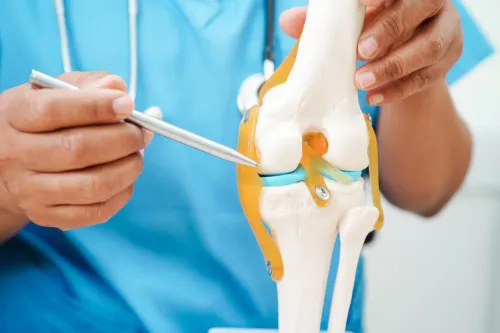
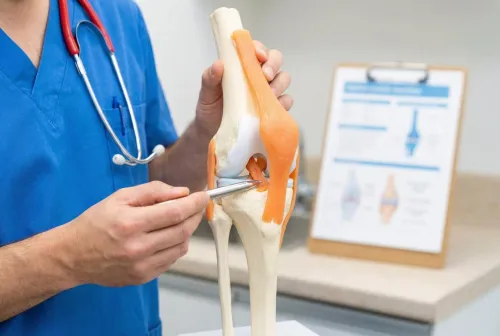
The knee can broadly be considered as having different compartments. Arthritis may sometimes be much more advanced in one compartment than elsewhere.
If damage remains localised and other important structures are functioning appropriately, replacing only the affected portion may be considered.
By comparison, when arthritis is widespread across the knee, another treatment strategy may be more appropriate.
Symptoms Alone Cannot Confirm Suitability
Two people may describe similar knee pain while having very different joint damage.
A patient considering surgery generally needs a structured assessment that includes symptom history, physical examination, weight-bearing X-rays, and additional investigations when clinically indicated.
The surgeon evaluates factors such as:
- Location of arthritis
- Severity of cartilage loss
- Knee alignment
- Ligament stability
- Range of motion
- Presence of significant deformity
- Activity requirements
- Overall health
- Response to previous non-surgical treatment
These findings help determine whether partial replacement is technically and clinically suitable.
Why Preserving Healthy Parts of the Knee Matters
The concept behind partial replacement is to treat the damaged compartment while retaining unaffected areas where possible.
For appropriately selected patients, this can preserve more of the natural knee structures. However, potential advantages should always be considered alongside limitations, surgical risks, rehabilitation requirements, and the possibility that arthritis may progress elsewhere in the knee over time.
No joint replacement procedure should be presented as risk-free or permanent for every patient.
Conservative Treatment Usually Has a Role Before Surgery
Surgery is generally considered in the context of symptoms, structural damage, and response to appropriate non-operative care.
Depending on the individual, earlier management may include:
- Activity modification
- Physiotherapy
- Strengthening
- Weight management
- Pain medication
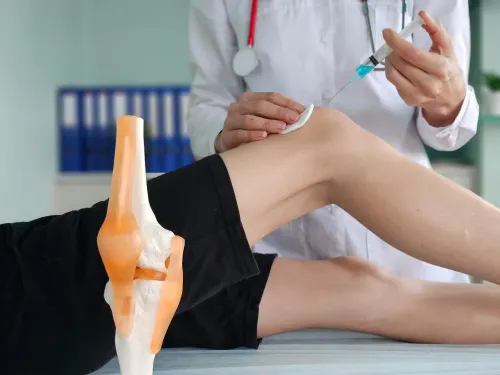
- Selected injections
- Supportive devices when appropriate
If significant pain and functional limitation continue despite suitable conservative management, surgical options can then be evaluated more closely.
Total Knee Replacement May Suit Different Patterns of Disease
The key question is not which operation sounds more appealing. It is which procedure matches the condition of the knee.
When arthritis is extensive across multiple compartments or other clinical factors make partial replacement unsuitable, total knee replacement may be discussed instead.
This is why choosing an operation without proper imaging and examination can lead to unrealistic expectations.
Patients in Mira Road and nearby areas of Maharashtra seeking assessment for knee arthritis can consult Dr. Santosh Pandey to understand whether continued conservative management, a joint-preserving approach, partial knee replacement, or another surgical strategy is appropriate.
A good surgical decision begins with accurate patient selection. Localised arthritis, persistent symptoms, functional limitation, knee stability, and the condition of the remaining joint all need consideration. The aim is not to choose the smallest procedure possible, but to choose treatment that appropriately addresses the actual pattern of knee disease.
Keywords