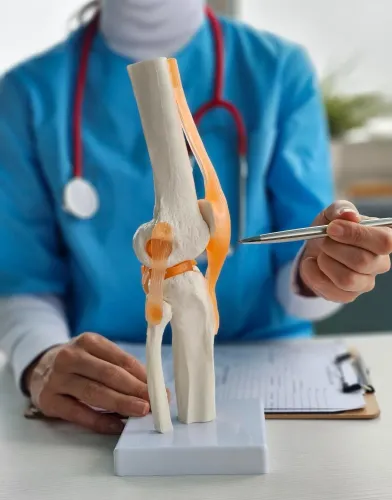

Shoulder pain that disappears and returns is not automatically harmless, especially when each episode lasts longer, follows a new injury, or leaves behind weakness or reduced movement. By tracking the pattern and matching it to specific warning signs, you can decide whether you need emergency care, a routine medical review, physiotherapy, or a shoulder specialist.
Key takeaways
- Seek urgent care for sudden weakness, deformity, chest pain, or severe injury-related pain.
- Record triggers, pain location, duration, night symptoms, and movement limits.
- A shoulder examination helps distinguish tendon, joint, instability, and neck-related causes.
- MRI, ultrasound, or X-ray is chosen according to the suspected problem.
What Counts as Recurring Shoulder Pain—and When Is It Urgent?
Recurring shoulder pain means pain that lasts beyond 2–4 weeks, returns repeatedly, or comes back after a pain-free interval. A brief symptom-free period does not rule out a tendon tear, instability, arthritis, or a neck-related cause; repeated episodes deserve assessment when they limit sleep, work, or movement.
| Shoulder pain timeline | What to do | Warning signs |
|---|---|---|
| Immediate: now | Seek emergency assessment | Major injury, visible deformity, sudden weakness after injury, inability to use or raise the arm, severe swelling, a hot red joint with fever, or sudden numbness |
| Immediate: now | Seek emergency assessment | Shoulder pain with chest pain, shortness of breath, sweating, nausea, faintness, or pain spreading to the jaw or arm |
| Within days | Arrange urgent clinical review | Progressive night pain, unexplained weight loss, worsening weakness, or repeated slipping, dislocation, or a feeling that the shoulder will give way |
| After 2–4 weeks or repeated episodes | Book a routine shoulder specialist appointment | Pain persists despite sensible self-care, returns after recovery, or causes restricted movement, objective weakness, or failed rehabilitation |
A pain-free interval lowers the immediate risk but does not erase recurrence. A shoulder specialist can assess instability, rotator-cuff disease, frozen shoulder, arthritis, and neck or nerve causes; persistent night pain alone does not prove that you need surgery.
What Pattern Does Your Pain Follow?
Pain that returns with overhead activity, reaching behind your back, or lying on one side usually points to the shoulder. Pain that travels below the elbow, changes with neck movement, or includes tingling and numbness deserves a neck and nerve assessment as well.
| Pattern | Clues | More likely source |
|---|---|---|
| Rotator cuff tendinopathy or subacromial pain | Pain lifting the arm, reaching overhead, or sleeping on that side; strength is limited mainly by pain | Shoulder tendons or bursa |
| Rotator cuff tear | Sudden weakness after lifting or a fall; you cannot raise the arm normally even when pain is controlled | Torn tendon |
| Frozen shoulder | Progressive pain followed by marked restriction of active and passive movement in several directions; frozen shoulder symptoms and duration often extend over many months | Stiff shoulder capsule |
| Instability | Repeated slipping, dislocation, or a feeling that the shoulder will give way | Shoulder instability |
| Neck nerve irritation | Burning or electric pain from the neck into the arm, with tingling, numbness, or weakness; neck position changes it | Cervical nerve root |
| Referred pain | Shoulder discomfort without consistent shoulder movement findings; chest pressure, breathlessness, sweating, abdominal pain, or illness may accompany it | Heart, diaphragm, or another organ |
A rotator cuff tear can appear on MRI in someone without pain, so match scans to the examination. Seek urgent assessment for shoulder pain with chest symptoms, breathing difficulty, fever, or a hot swollen joint.
Who Should You See, and What Should You Record First?
Choose the emergency department after a major injury with visible deformity, sudden inability to raise the arm, severe swelling, new numbness, or a hot joint with fever. Chest pain, breathlessness, sweating, or nausea with shoulder pain also needs urgent assessment.
| Clinician | Choose this option when |
|---|---|
| General practitioner | The cause is unclear, pain persists, neck symptoms or referred pain are possible, or you need an initial examination and referral |
| Physiotherapist | A clinician has excluded urgent injury and you need supervised exercise for recurrent shoulder pain |
| Sports medicine clinician | Pain follows training, throwing, lifting, or contact sport and you need a return-to-activity plan |
| Shoulder specialist | You have objective weakness, recurrent slipping or dislocation, restricted passive movement, failed rehabilitation, suspected tendon tear, or significant arthritis |
The question of when to see a shoulder specialist is straightforward: book one when instability keeps returning, weakness affects daily tasks, night pain persists despite sensible self-care, or the diagnosis remains uncertain. A general practitioner or shoulder specialist can also assess whether the problem comes from the neck rather than the shoulder.
Take this appointment checklist:
- Write the first date, each recurrence, pain-free intervals, and the activity that triggered it.
- Record pain location, night symptoms, weakness, stiffness, clicking, numbness, and episodes of giving way.
- List previous dislocations, injuries, scans, injections, medicines, and physiotherapy exercises.
- Note which movements you cannot perform and what treatment helped or failed.
What Will a Shoulder Specialist Examine, and Which Scan Is Useful?
The shoulder specialist examination comes before the scan: it identifies whether pain arises from the joint, rotator cuff, neck, or another source. The clinician asks how symptoms began, checks posture and shoulder blade movement, palpates tender areas, and compares strength on both sides.
Comparing active and passive range of motion is crucial: weakness with preserved passive movement suggests a tendon or nerve problem, while loss of both raises concern for frozen shoulder or arthritis.
The shoulder ultrasound versus MRI choice depends on the question being asked.
| Option | Best question answered | When it adds useful information |
|---|---|---|
| Shoulder X-ray | Is there arthritis, a fracture, dislocation, bone spur, or major joint-space loss? | Use it as the initial image for persistent pain, injury, stiffness, or suspected arthritis. |
| Ultrasound | Is a rotator cuff tendon inflamed, torn, or moving abnormally? | Useful for dynamic tendon assessment and comparison with the opposite shoulder; it cannot assess deep bone or every labral injury. |
| MRI | Is there a detailed tendon, labral, cartilage, marrow, or muscle problem? | Choose it after examination and X-ray identify a specific soft-tissue question or surgery is being considered. |
An MRI finding is not automatically the pain source; rotator cuff tears occur in people without symptoms. Imaging must match the history and examination. Persistent night pain, objective weakness, restricted motion, failed rehabilitation, recurrent instability, or uncertainty about neck-related pain justifies specialist assessment, not automatic surgery or an immediate MRI.
How Does the Diagnosis Change Treatment Decisions?
The diagnosis determines what you stop, restore, or repair; a scan alone does not make the shoulder surgery decision. A painful tendon without objective weakness usually leads to activity modification and progressive shoulder exercises, followed by reassessment after structured rehabilitation.
- Rotator-cuff tendinopathy or a nontraumatic partial tear: Start exercise-based rehabilitation. A corticosteroid injection in the shoulder can provide short-term relief when pain blocks therapy, but it does not mend a tear. Repeated injections require caution, and diabetes requires glucose planning.
- Persistent weakness, a suspected full-thickness tear, or an acute tear after injury: Seek shoulder-specialist review. Repair becomes more relevant when pain and weakness continue despite appropriate rehabilitation, especially in a younger or highly active person.
- Recurrent slipping, dislocation, or giving way: Treat this as instability, not ordinary tendinopathy. Stabilization rehabilitation or stabilization surgery may be appropriate after examination.
- Restricted passive motion: This supports frozen shoulder, where forced loading can worsen symptoms. Arthritis with substantial loss of daily function, examination-confirmed joint disease, and failed nonsurgical care can support replacement; an X-ray alone cannot make that decision.
- Neck symptoms or normal shoulder findings: Reassess the pain source before selecting shoulder pain treatment options.
Dr. Santosh Pandey is useful when objective weakness, recurrent instability, failed rehabilitation, suspected full-thickness tear, significant arthritis, or diagnostic uncertainty requires specialist examination. Night pain alone does not prove that surgery is needed.
Frequently asked questions
When is recurring shoulder pain urgent?
Seek urgent care for shoulder pain after a major injury, visible deformity, sudden weakness, chest pain, or severe pain with loss of movement.
What shoulder pain patterns should you record?
Record where the pain starts, which movements trigger it, whether it affects sleep, how long episodes last, and whether numbness or neck pain occurs.
Who should you see for recurring shoulder pain?
See a shoulder specialist when pain lasts beyond 2–4 weeks, keeps returning, or limits sleep, work, or movement.
Which scan is useful for shoulder pain?
X-rays assess bones and arthritis, ultrasound assesses tendons during movement, and MRI shows tendons, cartilage, labrum, and other soft tissues.
How does diagnosis change shoulder pain treatment?
Treatment depends on the cause and can include activity changes, physiotherapy, medicines, injections, or surgery for selected structural problems.