Bow legs, flat feet, intoeing and occasional aches are common during childhood, but a worsening deformity, limp, restricted movement or one-sided change deserves closer attention. You will learn which patterns fit normal development, which symptoms need urgent care, what an assessment involves and how growth affects treatment decisions.
Key takeaways
- Bow legs often straighten by age two; mild knock knees can follow.
- Persistent, worsening, painful, or one-sided changes need a routine assessment.
- Same-day care is needed after serious injury, sudden pain, or inability to walk.
- Growth plates influence treatment choices, healing, and follow-up timing.
Which childhood bone and joint changes are usually part of development?
Age and pattern matter more than appearance alone. Bow legs are common in infants and toddlers; legs often straighten around age 2, followed by mild knock knees during early childhood. Intoeing can also occur as the thighbone, shin or foot develops, and it often improves with growth.
| Change | More consistent with development | Arrange assessment when |
|---|---|---|
| Bow legs | Both legs curve similarly in infancy or toddler years and gradually improve | One side is worse, the angle increases, the child is short for age, or the curve is greatest near the upper shin |
| Knock knees | Both knees angle inward mildly during early childhood, without pain or walking difficulty | The deformity is marked, asymmetric, painful, worsening, or persists beyond the expected growth pattern |
| Intoeing | The child walks and runs normally, with similar foot direction on both sides | A new limp, frequent falls, pain, stiffness, or clear one-sided change develops |
| Flat feet | The arches appear when the child stands on tiptoe, and walking is painless | The feet are rigid, painful, stiff, or limit activity |
Normal developmental variation is usually symmetrical, painless and compatible with running, climbing and age-appropriate movement. Flexible flat feet rarely need treatment when they cause no symptoms; arch supports may ease fatigue but do not permanently create an arch.
Arrange an assessment for a changing limb shape, unequal shoulder or hip height, one leg becoming shorter, reduced joint movement, persistent night pain, swelling or loss of function. Fever, weight loss or a worsening deformity adds urgency.
Which signs call for a routine appointment and which need same-day care?
Arrange a routine child orthopaedic appointment for a limp lasting more than a few days, recurring pain, or a limb-length difference that becomes more noticeable. Book an assessment for a progressive deformity, changing leg shape, uneven shoulder or hip height, reduced joint range, or loss of movement.
Persistent night pain, unexplained swelling, a lump, repeated joint swelling, pain with fever, weight loss, or declining activity also need prompt assessment rather than being labelled “growing pains.” In an infant, loss of a previously acquired movement deserves review; in an adolescent, thigh or knee pain with a limp can come from the hip.
| Situation | Action | Reason |
|---|---|---|
| Sudden limp with hip, thigh, or knee pain | Same-day medical care; do not allow weight-bearing | Slipped capital femoral epiphysis can worsen when the child walks |
| Fever with a hot, swollen joint | Same-day emergency assessment | Infection can damage the joint quickly |
| Visible deformity, severe swelling, or inability to bear weight after injury | Same-day care | A fracture or growth-plate injury can be hidden on the first X-ray |
| Sudden weakness, or loss of bladder or bowel control | Emergency care immediately | These signs can indicate urgent nerve or spinal compression |
Do not wait for a routine appointment when pain follows a significant injury and the child cannot use the limb. A growth-plate fracture may need specialist follow-up even when the first image looks reassuring.
What happens during a child orthopaedic assessment?
The assessment starts with your child’s story, not an X-ray. Tell the clinician about birth history and development, including breech position, prematurity, delayed milestones, previous injuries, pain timing, activity triggers, limping, and changes in walking or movement.
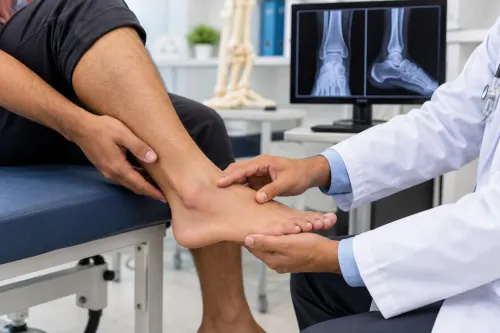
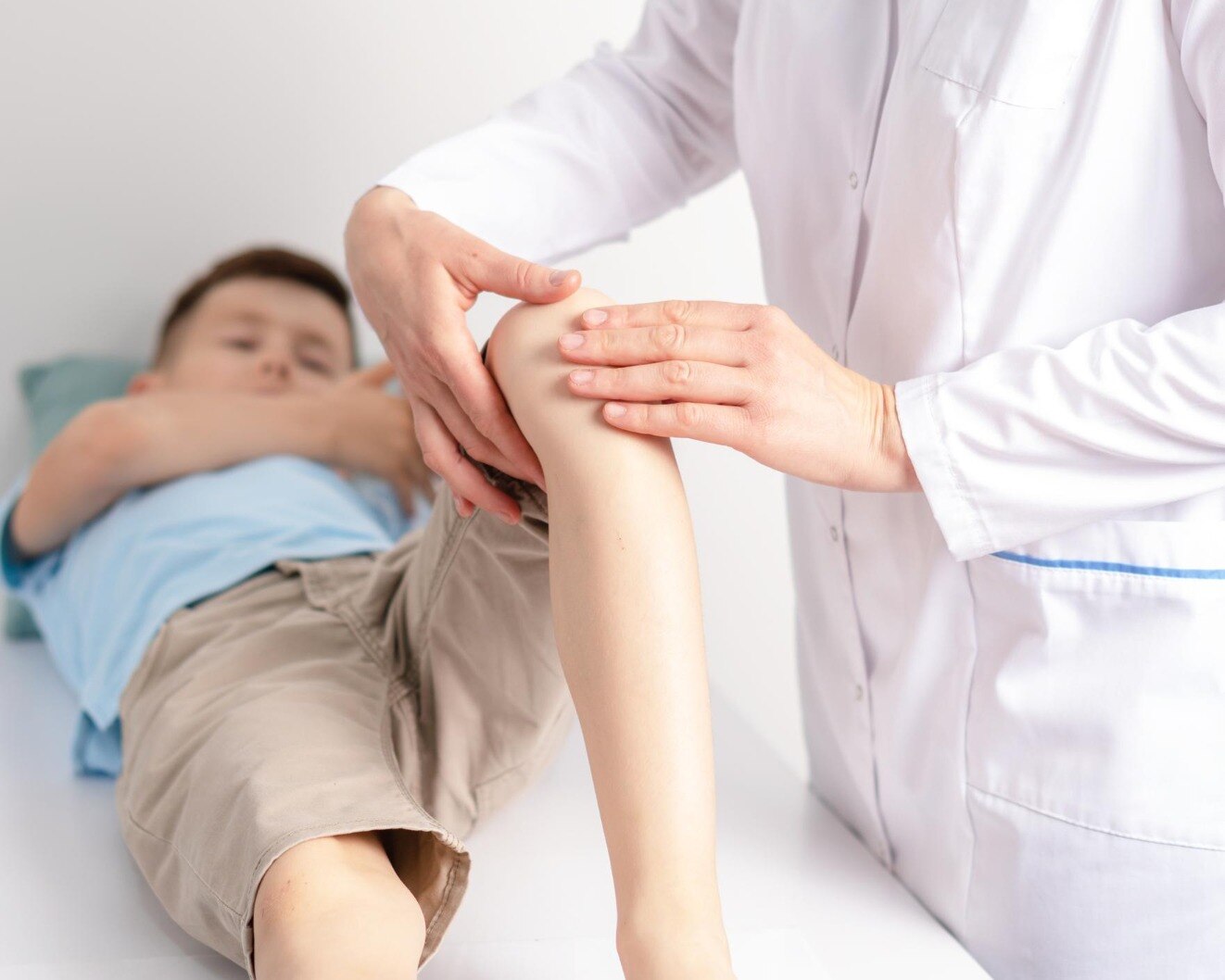
1. Expect gait observation while your child walks, runs, turns, and sometimes stands on one leg. The clinician compares both sides with limb-length and alignment checks, looking for bowing, knock-knees, uneven hips or shoulders, foot position, and spinal curvature.
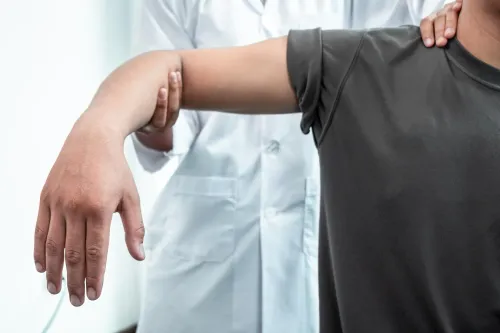
2. Range of motion and strength testing covers the hips, knees, ankles, shoulders, and spine. The examiner checks pain, stiffness, weakness, swelling, tenderness, muscle bulk, reflexes, and whether movement has been lost.
3. Imaging depends on the finding and age. X-rays show bone shape, alignment, fractures, and growth-plate relationships; ultrasound can assess an infant’s hip before the bones fully appear; MRI shows cartilage, muscles, ligaments, bone marrow, and early joint disease.
A growth-plate injury can be missed on an initial X-ray because cartilage does not show, so tenderness over the growth plate and follow-up matter.
4. Before the appointment, record when symptoms began, which side hurts, what worsens or relieves them, fever or weight loss, falls, sports, and medicines. Keep dated photos of swelling or limb shape and a short video of the gait. Bring earlier reports and images.
Dr. Santosh Pandey can use these records to compare progression with examination findings and choose observation, repeat imaging, or treatment.
Related services
Pediatric Orthopaedic Services Pediatric Orthopaedic Services ### Pediatric Orthopaedic Services Pediatric orthopaedic services focus on the diagnosis, treatment, and management of bone, joint, muscle, and spine... View service → |
Pediatric Orthopedic Specialist Pediatric Orthopedic Specialist Children have unique orthopedic needs because their bones, joints, muscles, and growth plates are still developing. View service → |
How do common growth-related conditions differ by age and symptom pattern?
Age helps narrow the possibilities, but symptom pattern separates normal variation from disease: painless, flexible and symmetric changes are more reassuring than pain, stiffness, limping or progression.
| Age | More typical pattern | Clues that need assessment |
|---|---|---|
| Infants | Developmental variation can include mild positional asymmetry. | Developmental dysplasia of the hip may cause limited hip abduction, uneven thigh folds or a leg-length difference, even without pain. Targeted ultrasound is used for high-risk infants at about 6 weeks; X-rays become more useful after 4–6 months. |
| Toddlers | Intoeing, flexible flat feet, bow legs and knock knees often change with growth. | Arrange review for a worsening or one-sided shape, reduced movement, a limp, pain, or loss of a newly acquired skill. Rigid, painful flat feet raise concern for tarsal coalition. |
| School-age children | Temporary aches and painless flexible flat feet are common. | Idiopathic scoliosis may appear as uneven shoulders, waist or hips; a curve that progresses needs examination. Osteochondritis dissecans is suggested by persistent knee pain with swelling, catching, locking or focal tenderness. |
| Adolescents | Activity-related pain can follow running, jumping or rapid growth. | Osgood-Schlatter disease causes pain and tenderness over the tibial tubercle, often with a bump, and usually improves with activity adjustment. A slipped capital femoral epiphysis can cause hip, thigh or knee pain and a limp; stop weight-bearing and seek urgent assessment. |
A new limp, increasing asymmetry or loss of joint range is not ordinary growing pain. Same-day care is needed for inability to bear weight, sudden severe pain, fever with a hot swollen joint or a visibly deformed limb.
How do growth plates affect treatment and follow-up?
Growth plates are the areas of cartilage where a child’s bones lengthen, so remaining growth can either correct a problem or make it worse. Treatment must account for the child’s bone age, growth remaining, and the plate’s location—not just the injury or deformity seen today.
- Fractures: A growth plate fracture can be difficult to see on the first X-ray because cartilage does not show clearly. Tenderness directly over the plate still matters. A Salter-Harris fracture that extends into the joint needs accurate alignment and follow-up because growth arrest can cause later shortening or angular deformity.
- Limb-length differences: A small difference may need only observation or a shoe lift. Surgery depends on the predicted difference at skeletal maturity. Epiphysiodesis, which permanently stops growth in a selected area, must be timed carefully; an inaccurate prediction can leave inequality or create overcorrection.
- Angular deformities: Guided growth temporarily slows one side of a growth plate while the other side catches up. It does not straighten the bone immediately. Follow-up detects correction that stops too soon or returns after implant removal.
- Scoliosis: A curve can progress rapidly during a growth spurt, so remaining growth influences observation, brace use, and surgical timing.
- Joint disease: Joint replacement is usually avoided while substantial growth remains because the implant cannot grow with the child. Joint-preserving treatment comes first, with replacement reserved for severe pain and major loss of function.
Frequently asked questions
Which childhood leg changes are usually part of development?
Bow legs are common in infants and toddlers and often straighten around age two. Mild knock knees can occur during early childhood. Intoeing may come from the thighbone, shin, or foot and often improves with growth.
When should a child see an orthopaedic doctor routinely?
Arrange an appointment for persistent, worsening, painful, stiff, or one-sided changes, a limp, repeated falls, or a difference that does not match the child’s age and development.
When does a child need same-day medical care?
Seek same-day care after a significant injury, sudden severe pain, visible deformity, inability to stand or walk, a hot swollen joint, or fever with joint pain.
What happens during a child orthopaedic assessment?
The doctor reviews the child’s growth, symptoms, injuries, development, and family history, then watches walking and checks alignment, movement, strength, tenderness, and leg length. Imaging is ordered when examination findings require it.
How do growth plates affect treatment and follow-up?
Growth plates are areas of developing tissue near the ends of children’s bones. An injury or deformity involving them can alter future growth, so treatment and follow-up depend on the child’s age, the affected bone, and the growth plate’s condition.